
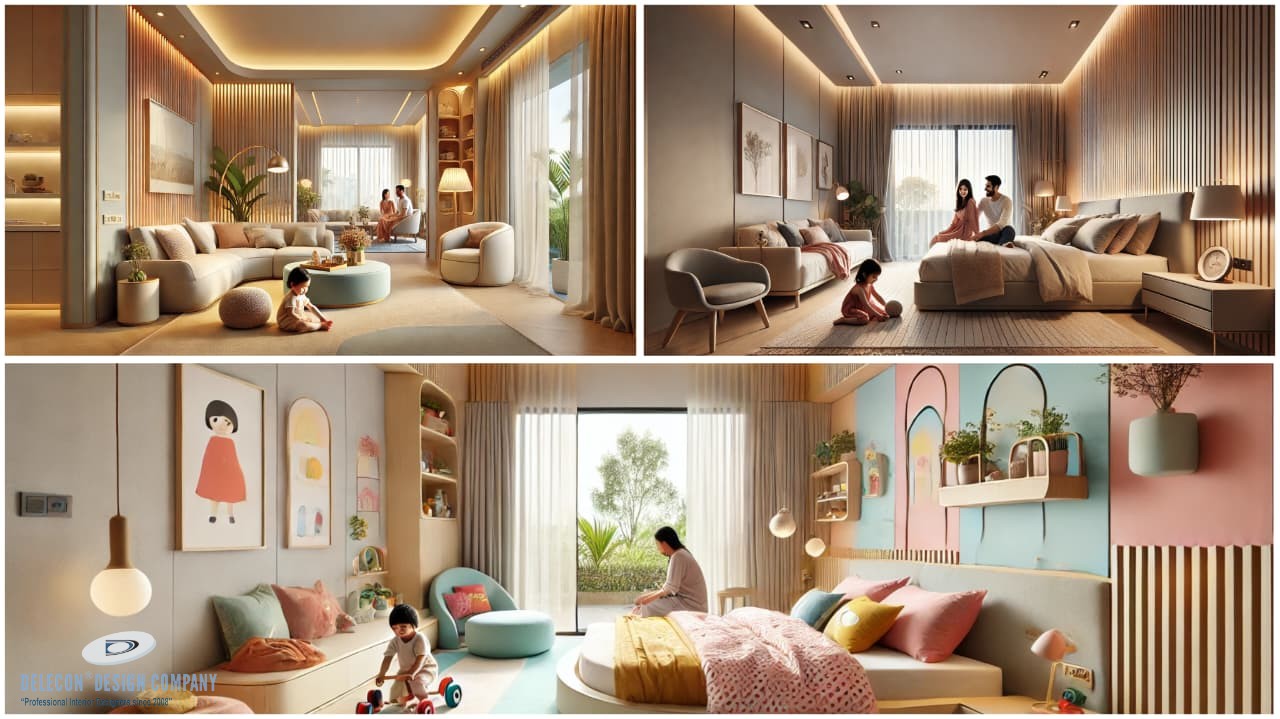
Interior design is not only about creating beautiful spaces. It’s about creating safe, functional, and caring environments for every member of the family. Sadly, many designs today focus only on looks and low budgets— ignoring the fact that the most vulnerable members of a household, especially children under the age of four and senior citizens, require special care in planning. That is where child-safe interior design becomes essential.
As turnkey home interior designers working across Mumbai, Navi Mumbai and Thane, we have seen both sides—homes that look stylish but are full of hidden hazards, and homes that are thoughtfully planned where children can move freely without parents living in fear. This article is written from real on-site experience in apartments at Dadar, Parel, Kurla, Ghatkopar, Vikhroli, Bhandup, Mulund, Thane, Kalyan, Dombivli, Ambernath, Badlapur, Chembur, Andheri, Vashi, Nerul, Kharghar, Airoli and Panvel.
The Hidden Dangers in Poorly Planned Interiors
Small children are naturally curious. They explore, climb, touch, and play without fear. This curiosity is a healthy part of their growth. But in homes designed without safety in mind, the same curiosity can easily lead to tragic accidents.
Common risky practices include:
- Sharp Corners & Hard Edges: Coffee tables, TV units, bed frames, and open shelves at head height that cause cuts, stitches and permanent scars.
- Unsafe Furniture: Beds or chairs without guard rails or stable support causing falls—especially in small Mumbai-sized bedrooms where circulation is tight.
- Slippery Floors: High-polish marble or glossy tiles that look premium but cause slips and head injuries for toddlers and elders.
- Exposed Electrical Fittings: Low switches, loose wiring, open MCB boxes or dangling light fixtures that increase the risk of electric shock.
- Unsafe Bunk Beds: Missing guard rails, sharp ladders or low ceiling clearances that invite dangerous falls in compact flats.
- Loose Rugs & Doormats: Thin mats that slide on vitrified tiles and create trip hazards near bathrooms and balconies.
Many of these mistakes are the result of contractors executing work without a proper structured interior planning system. When design decisions are taken only on-site, safety is often forgotten.
The Real Cost of Neglect
Families often prioritise cost savings when doing interiors—choosing cheaper materials or cutting corners on design consultation. But what good are savings if your child’s safety is compromised? A single unsafe decision can change the entire emotional atmosphere of a home.
- A fall from a high bed or unsafe loft can lead to fractures, scars or even long-term mobility problems.
- Head trauma due to sharp edges or slippery floors can cause neurological issues and developmental delays.
- Children may develop fear and anxiety about moving around their own home after a bad accident.
- Parents carry guilt for years, thinking, “We should have planned this better when we did our interiors.”
Money can be earned again. Your child’s health, safety and confidence cannot be replaced. That is why safe furniture for kids, correct flooring and secure electrical planning are worth every rupee.
Designing Homes That Truly Care
Good design means thinking beyond aesthetics and Instagram photos. A safe home is a happy home. Responsible interior designers consider the movement of every age group—toddlers, school-going children, parents and grandparents. When we design homes across Mumbai, Navi Mumbai and Thane, we follow a safety-led thought process:
- Rounded Corners: For centre tables, TV units, kids’ study tables, bed corners and wardrobes near circulation zones.
- Wooden or Carpet Flooring: Softer underfoot and reduces injury from slips and falls—especially in bedrooms and kids’ rooms.
- No Unsafe Hanging Items: We avoid heavy décor pieces directly above beds or areas where kids jump and play.
- Safe Electrical Work: Concealed wiring, child-proof sockets, RCD/MCB protection and slightly higher switch placements.
- Child- & Senior-Friendly Design: Non-slippery flooring near bathrooms, simple circulation and support where required.
- Practical Kids’ Rooms: Guard rails for beds, stable study furniture, soft flooring and storage at child-safe heights.
We design for families across Mumbai, Navi Mumbai & Thane—covering Central Line stations and suburbs including Dadar, Parel, Sion, Kurla, Ghatkopar, Vikhroli, Bhandup, Mulund, Thane, Kalyan, Dombivli, Ambernath, Badlapur—and Western/Harbour touchpoints like Chembur, Andheri, Vashi, Nerul, Kharghar, Airoli and Panvel. Each location has its own flat sizes and constraints, but the safety principles remain the same.
Room-by-Room Child-Safety Checklist for Indian Apartments
1. Living Room / Hall
- Choose a centre table with rounded corners or an upholstered ottoman instead of sharp glass tables.
- Keep TV unit height and wires out of reach—no hanging cables from set-top boxes or soundbars.
- Provide concealed storage for remotes, chargers and small objects that kids can put in their mouth.
- Use area rugs with anti-skid backing if you want softness, especially in homes at Vashi, Nerul and Kharghar where vitrified tiles are common.
2. Kids’ Room
- Never combine sharp furniture, bunk beds and slippery flooring in a small room—this is a perfect accident zone.
- Design study tables with smooth edges and ample leg space so kids sit with correct posture.
- Use wardrobes with soft-closing shutters and high-quality hardware so fingers don’t get trapped.
- Plan warm but glare-free lighting; no naked CFL or tube lights directly in the eye line of a child.
3. Master Bedroom
- Avoid having the bed almost touching a balcony door where children can easily access the railing.
- Provide bedside tables with chamfered or rounded corners if your child frequently sleeps with you.
- Keep medicines, cosmetics and small accessories in higher, closed storage—especially in compact flats in Mumbai and Thane.
4. Kitchen & Dining
The kitchen is a high-risk area if not planned thoughtfully. In many Navi Mumbai and Panvel homes, children freely enter the kitchen while parents cook. A child-safe kitchen should:
- Have non-slippery flooring that can handle spills of oil and water.
- Keep knives, gas lighters and glass jars in drawers with good-quality channels and handles.
- Use hob placement and chimney height carefully so the flame is away from the edge and children cannot directly touch it.
- Provide a designated place for school bottles and tiffins at a reachable but safe height.
5. Bathrooms & Balconies
- Use anti-skid tiles in wet areas—this is non-negotiable for elderly- and child-friendly homes.
- Provide simple grab points and ledges so kids don’t climb on unstable stools or buckets.
- Keep balcony grills at safe heights and avoid horizontal railings that work like a ladder for kids.
Real Mistakes We See in Mumbai, Navi Mumbai & Thane Homes
During site visits in Mulund, Thane, Panvel, Kalyan and Dombivli, we frequently see common patterns:
- Contractor-built TV units with thin, sharp plywood edges finished in high-gloss laminate at toddler head height.
- Very high beds with narrow steps in small 1BHK and 2BHK flats, which look “luxury” but are difficult for kids and elders.
- Overhead storage boxes above the bed without proper anchoring or with poorly fixed shutters.
- Random placement of plug points and switches without coordination between electrical design and furniture layout.
These are not small issues. When you are staying on the 12th, 18th or 25th floor in Navi Mumbai or Thane, you cannot depend on “we will manage” or “we will be careful”. The design itself should reduce risk.
How DELECON® DESIGN CO. Plans Child-Safe Interiors
As a professional firm handling design + execution, we follow a strict, step-by-step system:
- 1. Safety Questions in the First Meeting: We ask about children’s age, sleeping patterns, play habits and senior citizens in the home.
- 2. Zoning the Flat: We create safe activity zones for kids with soft surfaces and avoid risky elements around those zones.
- 3. Integrated Electrical + Furniture Planning: Our electrical layout and furniture design move together to avoid exposed wires.
- 4. Material Shortlisting: We guide clients toward safe finishes—rounded profiles, better hardware, practical laminates, soft flooring where required.
- 5. Structured Execution: Our structured & clean execution system ensures that what was discussed on paper is actually delivered on site.
- 6. Final Safety Walkthrough: Before handover, we walk the site like a child and a senior citizen—checking corners, heights, switches and circulation.
This approach has been applied in many of our residential projects in Navi Mumbai, Mumbai city and Thane region.
Safety First, Always
Interior design is about more than impressing guests. It’s about creating a secure foundation where your children can grow without fear—running, playing, studying and sleeping peacefully in a home that silently protects them.
Remember: Your children are not your expenses—they are your biggest savings. Invest in their safety before anything else. When you choose an interior designer, check whether they talk seriously about child safety, senior-friendly design and proper material standards—or only about “theme” and “low budget”.
Keywords used: child-safe interior design, kid-friendly home interiors, safe furniture for kids, baby-proof home design, kids room safety tips, family-friendly interiors, interior designers in Mumbai, Navi Mumbai & Thane.
Frequently Asked Questions (FAQs) on Child-Safe Interior Design
1. How can I make my home kid-friendly?
Start with safe furniture for kids—rounded corners, stable beds and cushioned seating. Use wooden or carpet flooring
and keep electrical wiring concealed. Always design with both children and senior citizens in mind, especially in
compact flats in Mumbai, Navi Mumbai and Thane where movement space is limited.
2. What is the safest flooring for children?
Wooden flooring or carpet are the safest options. Both provide grip and reduce the impact of falls—ideal for
kid-friendly home interiors. In wet areas like bathrooms, always choose anti-skid tiles and avoid glossy finishes.
3. Are bunk beds safe for kids?
Bunk beds are safe if designed with guard rails, strong ladders and soft flooring below. The ceiling height of the
room should also be considered so the child can sit comfortably on the upper bed. Without these features, bunk beds
can be risky for small children.
4. What is baby-proof home design?
It means planning interiors to reduce risks for infants and toddlers—rounded edges, child-proof locks,
non-slippery flooring, placing switches out of reach, concealed wiring, safe balcony grills and proper storage
for medicines and cleaning chemicals. It is a complete mindset, not just adding a few corner guards later.
5. Why is child-safe interior design important?
Children are curious and vulnerable. A well-planned child-safe interior prevents accidents, avoids lifelong injuries
and creates a safe environment for confident growth. When safety is built into the design, parents can relax and
children can enjoy their home fully.
Want to Make Your Home Truly Child-Safe and Family-Friendly?
If you’re planning interiors for your growing family, toddlers, school-going children or even senior members at home, it is crucial to design with safety first. From rounded corners and soft flooring to child-proof electricals and secure furniture layouts — every small detail matters.
Speak directly with Mr. Rajveer Sharma and the DELECON® DESIGN CO. team to understand how we create safe, practical and beautiful interiors for families across Mumbai, Navi Mumbai and Thane.